Choosing studio headphones is easier once you split the job in two. Closed-back pairs suit tracking because they keep sound out of the mic, while open-back pairs suit mixing because they sound more natural.
Headphones are a big part of any home studio, especially when your room or neighbours limit what speakers can do.
| Item | Key fact |
|---|---|
| Best design for tracking | Closed-back, to limit bleed into the microphone |
| Best design for mixing | Open-back, for a wide, natural sound |
| Open-back sound | Generally sounds truer to the source than closed-back |
| Open-back limitation | Sound escapes, so uses are more limited |
| Example open-back / closed-back pair | Sennheiser HD 490 PRO / HD 480 PRO |
The figures and claims above come from Sennheiser’s headphone comparison and Sound On Sound. Products and advice change, so check the sources before you rely on them.
Open-back versus closed-back: what actually changes
The difference is what happens to the sound from the back of each earcup. Sound On Sound explains that open earcups let rearward sound disperse, whereas closed earcups contain it.
That single design choice explains almost everything else. Sound On Sound describes a trade-off between tonal accuracy and the practical limits imposed by sound leakage.
Closed-backs trade some of that openness for isolation. They reduce outside noise and headphone bleed, though isolation varies by model and fit.
- Open-back: wide, natural presentation, but sound leaks out and outside noise leaks in.
- Closed-back: isolated and controlled, but the sealed cup can colour the sound.
Neither is “better” in general. They are tools for different moments in a session.
Which headphones for tracking?
When a microphone is open, every bit of sound leaking from your headphones can end up on the recording. During overdubs, headphone leakage can add unwanted backing-track audio to the new recording.
That is why conventional wisdom says to use closed-back headphones for tracking. Sennheiser’s own guidance for its closed-back model lists the same use cases:
- Sennheiser recommends this model for recording near microphones and working in spaces where surrounding noise makes monitoring difficult.
There are exceptions. Sound On Sound also notes that not using headphones at all can work very well for acoustic music or instrumental styles, and the same article explores whether going open has advantages in some tracking situations. Treat that as a special case, not a starting point.
Which headphones for mixing?
For mixing, most guides lean open-back. Sennheiser says its open-back model’s construction creates a wide and natural sound, and that during mixing sessions subtle panning adjustments become easier to judge.
Its suggested workflows for that design are a useful checklist of what open-backs are good at:
- Sennheiser positions this model for long sessions in quiet studios, particularly when judging a mix’s stereo placement and sense of space.
Remember that this is a manufacturer describing its own product, so read it as a description of the design’s strengths rather than a verdict on any one model.
A closed-back pair can still be used for mixing. Sennheiser claims its closed-back option keeps a neutral, reliable sound, unlike many closed-back designs that alter tonal balance. That claim matters because tonal colouring is the main risk of a sealed cup when you are making EQ decisions.
Your room decides more than you think
Open-backs reward quiet spaces. Sennheiser recommends the HD 490 PRO for detailed listening in quiet workspaces.
If surrounding noise interferes with monitoring, closed-back headphones can help, including during mixing.
Headphones also do not replace speakers. If you plan to mix on monitors as well, acoustic treatment will improve what you hear from them far more than a headphone upgrade will.
A simple buying approach
You do not need to chase a perfect model. Work through these steps:
- Decide whether you track live sources (vocals, guitar, drums) or work mostly in the box.
- If you track often, buy a closed-back pair first.
- If you mostly mix in a quiet room, buy an open-back pair first.
- Add the other type later, when the first one’s limits start to bother you.
- Learn your pair by playing familiar music through it before you mix anything.
The last step matters most. Every pair has a character, and knowing it lets you translate what you hear to other systems.
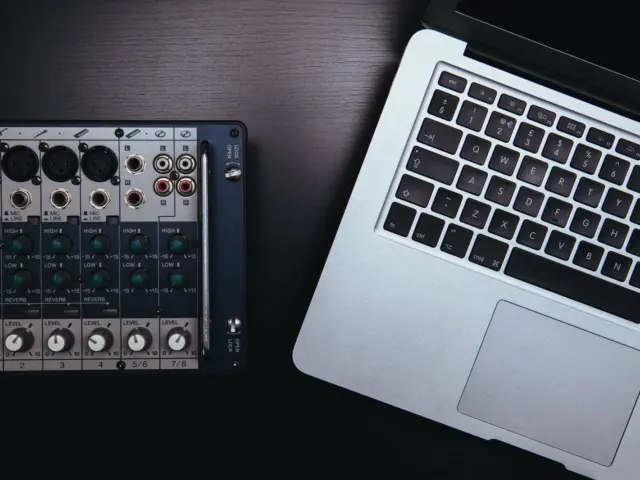
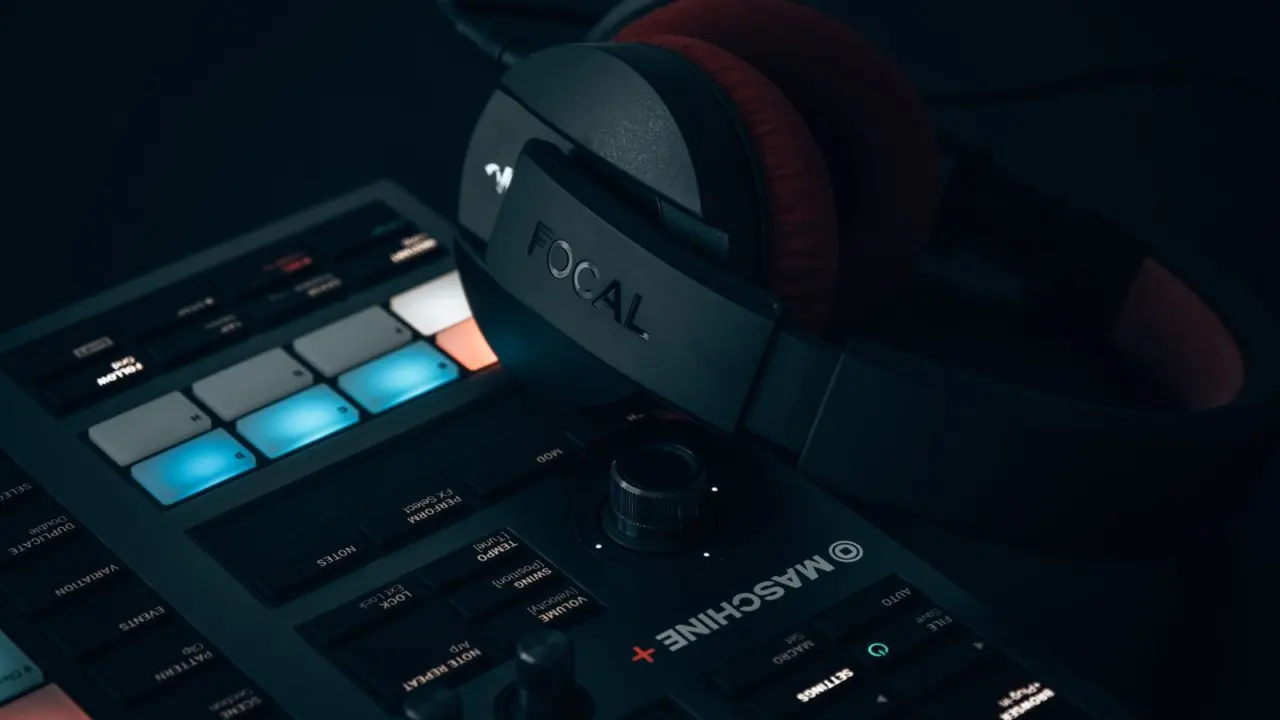
If you write parts on keys or pads, a midi controller and laptop can be used with compatible closed-back headphones to reduce sound reaching others.
Habits that make any pair work harder
Good habits matter as much as the model on your head. A modest pair you know well will beat an expensive pair you have never learned.
Start with reference tracks. Load a few finished songs you know inside out, and switch between them and your mix at matched loudness. Your ears quickly tell you whether your low end is too heavy or your top end too bright.
Next, take regular breaks. Fatigue changes how you hear, and headphones sit very close to your ears, so rest them often and keep your listening level moderate. If you want exact safe-listening guidance, look it up from a health authority in your country rather than relying on a gear article.
Finally, check the mix elsewhere before you call it done:
- On a second pair of headphones of the other design.
- On small speakers, such as a laptop or phone.
- In the car or on a living-room system, if you can.
If a mix holds up across those, it will travel well. If it falls apart on one of them, you have learned something about your pair that you can correct next time.
Fit and comfort deserve a mention too. Clamping force, earpad material and weight all affect how long you can work without fatigue, and sealed earcups can run warm over a long session. If you can, try a pair before you commit, or buy from a seller with an easy return policy.
Frequently asked questions
Can I use one pair of studio headphones for everything?
Show answer
Yes, but with compromises. A neutral closed-back pair covers tracking and reasonable mixing, while an open-back pair is limited for tracking because it leaks into the microphone.
Why do open-back headphones sound more natural?
Show answer
Sound from the rear of the earcup escapes into free air instead of being trapped, so open-backs generally sound truer to the source, according to Sound On Sound.
Are open-back headphones ever used for tracking?
Show answer
Occasionally. Sound On Sound explores the idea, but conventional wisdom still says closed-back for tracking because of spill into the microphone.
Do I still need speakers if I own good headphones?
Show answer
Headphones are enough for many home studios, but checking a mix on other playback systems helps you catch problems a single pair can hide.